
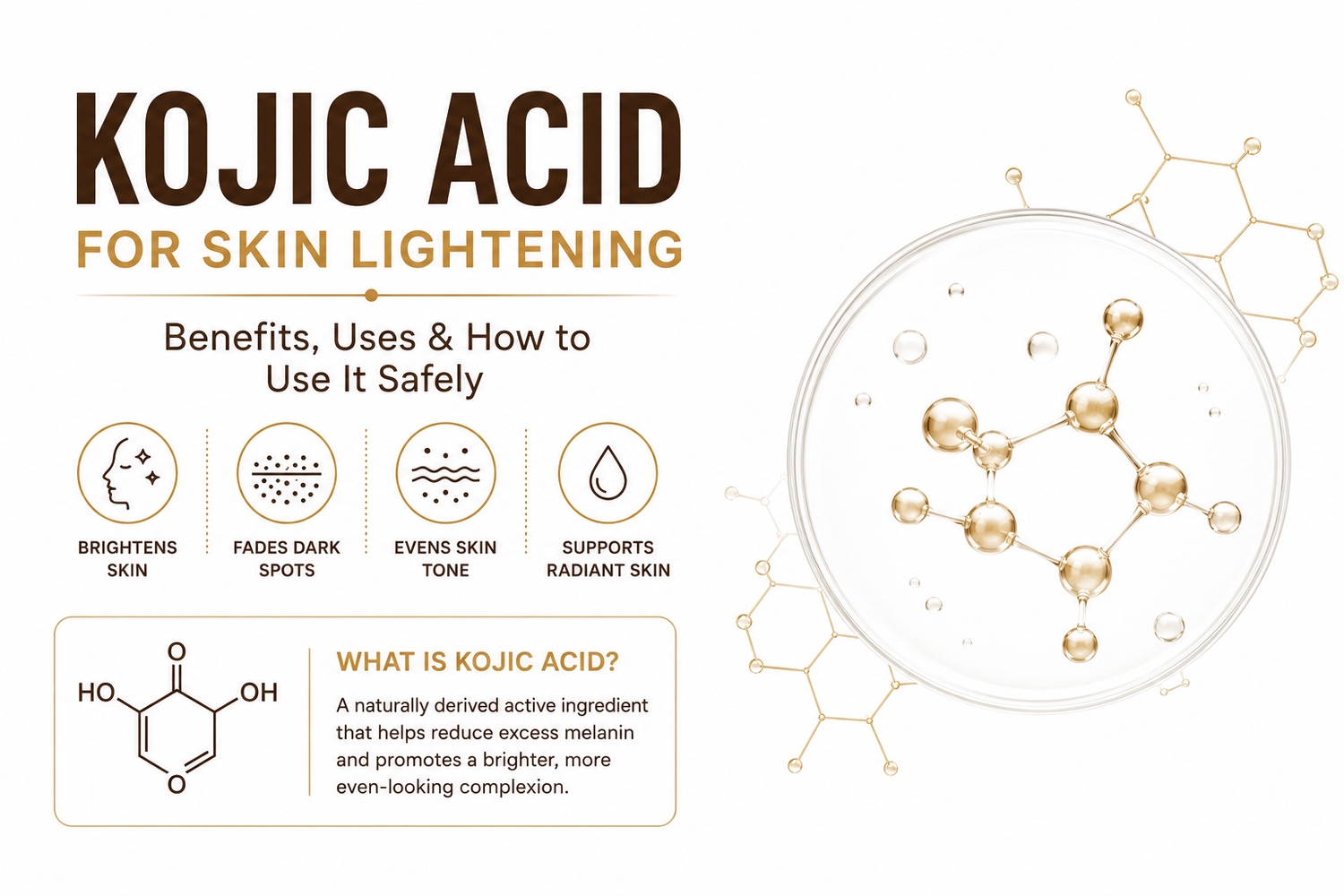
If you've ever searched for ingredients that help brighten the skin, fade dark spots, or improve uneven skin tone, you've probably come across kojic acid.
Whether you're dealing with acne marks, sun spots, melasma, post-inflammatory hyperpigmentation, or simply want to improve a dull-looking complexion, kojic acid can be a valuable addition to your skincare routine when used correctly.
In this guide, you'll learn what kojic acid is, how it works, its benefits, who should use it, how to use it safely, and what results you can realistically expect.
What Is Kojic Acid?
Kojic acid is a naturally derived active skincare ingredient used to improve the appearance of dark spots, uneven skin tone, and other forms of hyperpigmentation. It is produced during the fermentation of certain fungi, particularly species of Aspergillus, and is also formed during the production of traditional fermented foods such as soy sauce, sake, and rice wine.
In skincare, kojic acid is classified as a pigment-correcting active because it works by targeting excess melanin production rather than simply exfoliating the skin. This makes it a popular ingredient in creams, serums, soaps, and body care products designed to brighten the skin and promote a more even-looking complexion.
Unlike bleaching agents, kojic acid does not lighten your natural skin colour. Instead, it helps reduce the appearance of unwanted pigmentation so your skin can return to its natural, more even tone.
How Does Kojic Acid Work?
To understand how kojic acid works, it helps to know how pigmentation develops.
Your skin produces a pigment called melanin, which determines your natural skin colour. Melanin is produced by specialised skin cells known as melanocytes, and this process depends on an enzyme called tyrosinase.
Kojic acid helps by slowing the activity of tyrosinase. With less enzyme activity, the skin produces less excess melanin, allowing existing dark spots to gradually fade while reducing the formation of new pigmentation.
Instead of whitening healthy skin, kojic acid focuses on areas where excess pigment has accumulated, helping create a smoother, more balanced complexion over time.
Skin Concerns Kojic Acid Can Help Improve
Because it targets melanin production, kojic acid can be beneficial for several common pigmentation concerns.
Post-Acne Marks
After acne heals, many people are left with dark marks that linger for months. Kojic acid can gradually reduce the appearance of these post-inflammatory marks with consistent use.
Sun Damage
Years of UV exposure often lead to sun spots or age spots. By helping regulate melanin production, kojic acid can improve the appearance of these areas while encouraging a more even skin tone.
Melasma
Melasma is a form of pigmentation commonly triggered by hormones and sun exposure. Although it can be difficult to treat, kojic acid is often included in routines aimed at reducing its appearance.
Uneven Skin Tone
Some people don't have individual dark spots but instead notice that their complexion looks dull or patchy. Kojic acid can help restore a brighter and more uniform appearance.
Pigmentation After Skin Irritation
Dark marks caused by insect bites, eczema, burns or other inflammatory skin conditions may also improve over time with properly formulated kojic acid products.
Benefits of Kojic Acid for Skin
One reason kojic acid remains so popular is that it offers several benefits beyond simply fading dark spots.
Helps Brighten Skin
By reducing excess pigmentation, the skin naturally appears fresher and more radiant.
Supports Even Complexion
Instead of changing your natural skin colour, kojic acid helps restore a more balanced skin tone by reducing areas of excess pigment.
Suitable for Most Skin Types
When formulated properly, kojic acid can generally be used by oily, dry, combination and acne-prone skin types. People with sensitive skin should introduce it more gradually.

Works Well With Other Brightening Ingredients
Kojic acid is often paired with ingredients like niacinamide, vitamin C, tranexamic acid and hyaluronic acid for a more comprehensive brightening routine.
How Long Does Kojic Acid Take to Show Results?
Many people expect pigmentation products to work within days, but skin renewal takes time.
Most users notice:
- Early improvement within 4 to 6 weeks
- Visible fading after 8 to 12 weeks
- Better overall improvement after 3 to 6 months
The exact timeline depends on factors such as the depth of pigmentation, consistency of use, sun protection and overall skincare routine.
Older pigmentation naturally requires more time than newer marks.
Is Kojic Acid Safe for Skin?
Kojic acid is generally considered safe for cosmetic use when formulated at appropriate concentrations and used as directed. Most people can use it without problems, especially when they introduce it gradually.
However, like many active skincare ingredients, kojic acid may cause mild irritation in some people, particularly those with very sensitive skin or a damaged skin barrier.
How to Use Kojic Acid Safely
Using kojic acid correctly is just as important as choosing the right product.
A simple routine usually looks like this:
- Cleanse your skin using a gentle cleanser.
- Apply your kojic acid product according to the product directions.
- Finish every morning with a broad-spectrum sunscreen.
Sun protection is particularly important because UV exposure can trigger new pigmentation, reducing the progress you've made.
If you're building a complete routine, you may also benefit from using a body lotion for uneven skin tone after cleansing to keep the skin hydrated while supporting overall skin health.
Can Kojic Acid Be Used Every Day?
Beginners should avoid jumping straight into daily use.
A better approach is:
- Weeks 1–2: Use 2–3 times per week
- Weeks 3–4: Increase to alternate nights if comfortable
- After one month: Use more frequently if your skin tolerates it well and the product directions allow
Introducing active ingredients gradually helps reduce irritation and allows your skin time to adjust.
Ingredients That Pair Well With Kojic Acid
One of the biggest advantages of kojic acid is that it works well alongside several other skincare ingredients.
Niacinamide
Helps strengthen the skin barrier while improving overall brightness.
Vitamin C
Provides antioxidant protection while supporting a more radiant complexion.
Hyaluronic Acid
Adds hydration, helping minimise dryness associated with active ingredients.
Ceramides
Support the skin barrier and improve overall comfort during treatment.
If your goal is to create a complete brightening routine, consider combining kojic acid with products designed to improve dull body skin while maintaining healthy skin hydration.
Possible Side Effects
Most people tolerate kojic acid well, especially when introduced gradually.
However, some users may experience:
- Mild redness
- Temporary dryness
- Slight peeling
- Increased sensitivity
- Mild irritation
These effects are usually temporary and often improve once the skin adapts.
If irritation becomes severe or persistent, discontinue use and seek advice from a qualified healthcare professional.
Tips for Better Results
Small changes in your routine can significantly improve your results.
Wear Sunscreen Every Day
This cannot be overstated. UV exposure is one of the biggest causes of recurring pigmentation.
Be Consistent
Using kojic acid occasionally is unlikely to produce meaningful improvement. Consistency matters more than applying larger amounts.
Avoid Picking the Skin
Picking acne or scratching irritated areas increases the risk of long-lasting pigmentation.
Moisturise Regularly
Healthy skin barriers recover more efficiently and tolerate active ingredients better.
Introduce Other Actives Slowly
Avoid combining multiple strong exfoliating acids or retinoids immediately unless your skin is already accustomed to them.
Who Should Use Kojic Acid?
Kojic acid is suitable for adults who want to address concerns such as:
- Acne marks
- Sun spots
- Uneven skin tone
- Melasma
- Dull-looking skin
- Post-inflammatory pigmentation
People with highly sensitive skin may benefit from starting with lower-frequency use and ensuring they use moisturising products alongside it.
Frequently Asked Questions
Does kojic acid permanently lighten skin?
No. Kojic acid helps reduce the appearance of excess pigmentation, but new dark spots can develop if your skin is exposed to UV rays or other triggers. Daily sunscreen helps maintain results.
Can I use kojic acid every day?
Most people should start by using it 2–3 times per week. If your skin tolerates it well, you can gradually increase the frequency according to the product instructions.
Is kojic acid good for acne marks?
Yes. Kojic acid can help reduce the appearance of post-inflammatory hyperpigmentation (PIH), which are the dark marks left behind after acne heals.
Can I use kojic acid with niacinamide?
Yes. Niacinamide and kojic acid work well together. Niacinamide supports the skin barrier while helping improve uneven skin tone.
Does kojic acid work for melasma?
Kojic acid may help improve the appearance of melasma as part of a complete skincare routine. Because melasma is often influenced by hormones and sun exposure, daily sunscreen is essential.
Is sunscreen necessary while using kojic acid?
Yes. Sunscreen is one of the most important parts of a pigmentation routine. Without daily sun protection, new pigmentation can develop and reduce your progress.
Can people with oily skin use kojic acid?
Yes. Kojic acid is suitable for oily, combination, dry and acne-prone skin when used in an appropriate formulation.
How long does kojic acid take to work?
Some people notice brighter-looking skin within 4–6 weeks. More noticeable improvement in dark spots often takes 8–12 weeks or longer, depending on the type and depth of pigmentation.
Final Thoughts
Kojic acid has become one of the most trusted ingredients for improving pigmentation because it addresses the root cause of excess melanin production rather than temporarily masking discoloration. With regular use, it can help fade acne marks, reduce the appearance of sun spots and promote a brighter, more even complexion.