
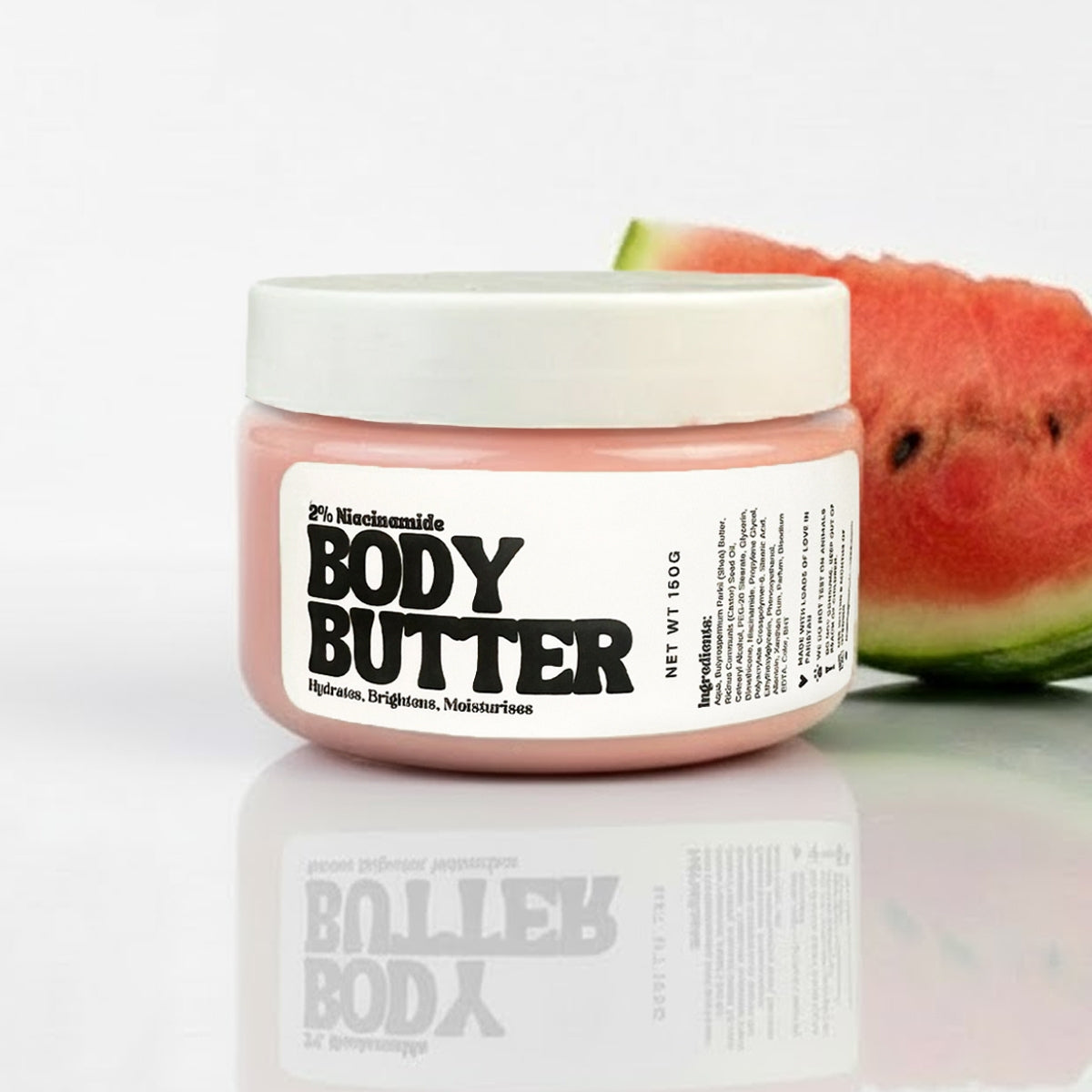
Niacinamide is one of the most trusted skincare ingredients for reducing dark spots, calming redness, and improving uneven skin tone. But here's something many people overlook—your body needs niacinamide just as much as your face.
Think about everything your body goes through every day. Sun exposure, sweat, friction from clothing, hard water, harsh soaps, and dry indoor air can all weaken your skin over time. These everyday factors often lead to dullness, rough texture, and stubborn pigmentation on areas like the elbows, knees, underarms, and inner thighs.
Niacinamide helps your skin repair itself, retain moisture, and gradually become brighter and healthier with consistent use. Instead of giving temporary results, it improves how your skin functions every single day.

If you're looking to build a complete body care routine, understanding how different ingredients work together is the first step towards healthier, smoother skin.
In this guide, you'll learn what niacinamide is, why it works so well for body skin, how to use it correctly, and how to build an effective routine for smoother, healthier-looking skin.
- What Is Niacinamide?
- Why Your Body Skin Needs Niacinamide
- 6 Benefits of Niacinamide for Body Skin
- Who Should Use Niacinamide on Their Body?
- How to Use Niacinamide for the Best Results
- Can You Use Niacinamide with Glycolic Acid?
- When Will You See Results?
- Ingredients That Work Well with Niacinamide
- Why a 2% Concentration Makes Sense
- Why Pakistani Skin Benefits from Niacinamide
- Frequently Asked Questions
- Conclusion
What Is Niacinamide?
Niacinamide is a form of Vitamin B3, an essential vitamin that supports healthy skin. It helps your skin repair itself from within by supporting the natural barrier that protects against moisture loss and environmental damage.
Dermatologists often recommend niacinamide because it is one of the few skincare ingredients suitable for almost every skin type. Whether your skin is dry, oily, combination, or sensitive, it is generally a mild ingredient.
One reason niacinamide has become so popular is its versatility. Instead of targeting just one concern, it improves several aspects of skin health at the same time. It can help fade pigmentation, calm redness, improve hydration, reduce excess oil, and strengthen the skin barrier—all without making the skin more sensitive to sunlight.
For body care, this makes niacinamide an excellent daily ingredient because it continues working quietly in the background every time you moisturise.
Why Your Body Skin Needs Niacinamide
Many people spend money on facial skincare but use ordinary soap on the rest of their body. Just like your face, your body is exposed to daily skin concerns such as dryness, irritation, and uneven skin tone.
Areas like the elbows, knees, underarms, and inner thighs experience constant friction, which can lead to dark spots over time. Daily showers, harsh soaps, and hard water can also strip away your skin's natural moisture, leaving it dry and rough.

Niacinamide helps repair this daily damage by strengthening the skin barrier and locking in moisture. It also supports a brighter, more even skin tone without making your skin more sensitive to the sun.
Because it's gentle enough for daily use, niacinamide is one of the best ingredients for keeping body skin healthy, hydrated, and smooth throughout the year.
6 Benefits of Niacinamide for Body Skin
1. Helps Fade Stubborn Pigmentation
One of niacinamide's biggest strengths is its ability to gradually reduce the appearance of dark spots. Instead of bleaching the skin, it works by slowing the movement of excess pigment to the surface.
With regular use, areas such as dark underarms, knees, elbows, inner thighs, and post-acne marks can begin to look more even over time.
Visible improvement usually appears after 8 to 12 weeks of consistent daily use.
2. Strengthens Your Skin Barrier
Healthy skin isn't just about looking smooth—it's about functioning properly.
A damaged skin barrier loses water more quickly and becomes more vulnerable to irritation. Niacinamide encourages your skin to produce more ceramides, fatty acids, and cholesterol, which are the building blocks of a healthy barrier.
As the barrier becomes stronger, your skin feels softer, retains moisture better, and becomes less prone to dryness and irritation.
3. Keeps Skin Calm and Comfortable
If your skin often feels irritated after shaving, sweating, or wearing tight clothing, niacinamide can help.
Its soothing properties help reduce visible redness while supporting your skin's natural recovery process. This makes it an excellent choice for people dealing with body acne, keratosis pilaris, or skin that reacts easily to everyday friction.
4. Supports Balanced Oil Production
Although niacinamide is known for hydration, it also helps regulate excess oil production.
This is particularly useful for areas like the back and chest, where excess oil often contributes to clogged pores and body breakouts.
Rather than drying the skin, niacinamide helps restore balance, allowing your skin to stay comfortable without feeling greasy.
5. Improves Skin Texture Over Time
Healthy-looking skin isn't just about having an even skin tone. Texture matters too.
If your skin feels rough, bumpy, or uneven, niacinamide can help improve its overall appearance with regular use. It supports healthy skin ren wal while strengthening the barrier, allowing your skin to feel softer and look smoother over time.
Many people notice that areas like their upper arms, legs, and back begin to feel less rough after a few weeks of consistent moisturising with niacinamide. While it isn't an exfoliating ingredient, healthier skin naturally develops a smoother surface.
6. Delivers Long-Lasting Hydration
Dry body skin is one of the most common skincare concerns, especially during winter or in air-conditioned environments. Even during Pakistan's humid summers, frequent showers and harsh cleansers can leave the skin dehydrated.
Niacinamide helps the skin retain moisture by improving its natural barrier. When paired with nourishing ingredients like shea butter and glycerin, it keeps skin hydrated for hours without leaving behind a heavy or greasy feeling.
This makes it an excellent everyday ingredient for anyone who wants soft, comfortable skin throughout the year.
Who Should Use Niacinamide on Their Body?
One of the reasons dermatologists love niacinamide is that it suits almost everyone.
You may benefit from adding it to your routine if you have:
- Dark underarms, elbows, knees, or inner thighs
- Uneven skin tone caused by sun exposure
- Body acne marks
- Dry or dehydrated skin
- Rough or dull-looking skin
- A weakened skin barrier from harsh soaps
- Sensitive skin that cannot tolerate stronger active ingredients
Because niacinamide is gentle, it can also be used by beginners who are just starting a body care routine.
How to Use Niacinamide for the Best Results
Using niacinamide is simple, but consistency is what makes the biggest difference.
Step 1: Exfoliate Two or Three Times Each Week
Dead skin cells can prevent moisturisers from working as effectively. Using a gentle glycolic acid body scrub a few times a week helps remove this buildup, leaving your skin smoother and allowing niacinamide to absorb better.
Avoid over-exfoliating. More is not always better.
Step 2: Cleanse with a Gentle Body Wash
Many traditional bar soaps have a high pH that strips away your skin's natural protective oils. Instead, choose a gentle body cleanser that cleans without leaving your skin feeling tight or dry.
Step 3: Apply Niacinamide While Skin Is Slightly Damp
This is one of the simplest habits that can dramatically improve your results.
After showering, gently pat your skin with a towel instead of rubbing it completely dry. Apply your niacinamide body butter within two or three minutes while your skin is still slightly damp. This helps lock moisture into the skin rather than allowing it to evaporate.
Massage the product into areas that commonly become dry or pigmented, including your arms, legs, knees, elbows, underarms, and inner thighs.

Step 4: Add Body Oil If Needed
If your skin feels very dry, finish your routine with a lightweight body oil such as squalane.
The oil acts as a protective layer, helping your moisturiser stay in the skin for longer while giving your skin a healthy glow.
Step 5: Target Stubborn Pigmentation
If certain areas are noticeably darker than the surrounding skin, such as the underarms or inner thighs, you can use a kojic acid treatment alongside niacinamide.
These ingredients work differently, making them an effective combination for improving uneven skin tone over time.
Can You Use Niacinamide with Glycolic Acid?
Absolutely.
In fact, these ingredients complement each other beautifully.
Glycolic acid removes dead skin cells and smooths rough texture, while niacinamide focuses on repairing the skin barrier, improving hydration, and fading pigmentation.
Think of glycolic acid as preparing the skin, while niacinamide helps rebuild and strengthen it.
The easiest way to use both is to exfoliate during your shower and apply your niacinamide body butter immediately afterward.
When Will You See Results?
Skincare takes patience.
Some people notice softer, more hydrated skin within the first couple of weeks. Pigmentation, however, takes longer. With consistent daily use, many people begin seeing visible improvements after 8 to 12 weeks.
The key is not finding the strongest product—it's sticking to a routine long enough for your skin to respond.
Ingredients That Work Well with Niacinamide
Niacinamide is one of the easiest skincare ingredients to combine with others.

It works especially well with:
- Glycolic Acid
- Kojic Acid
- Shea Butter
- Squalane
- Hyaluronic Acid
- Ceramides
These ingredients support one another to improve hydration, strengthen the skin barrier, and brighten uneven skin tone.
Why a 2% Concentration Makes Sense
Many people believe higher percentages always deliver better results, but that's not necessarily true.
Clinical research shows that 2% niacinamide is enough to improve skin hydration, strengthen the barrier, and reduce pigmentation when used consistently.
Higher percentages may not provide significantly better results for body care and can increase the chance of irritation in some people.
A balanced formula used every day is often more effective than an overly strong product used inconsistently.
Why Pakistani Skin Benefits from Niacinamide
Pakistani skin is naturally richer in melanin, which means it is more likely to develop pigmentation after sun exposure, friction, acne, or irritation.
Daily challenges such as heat, humidity, pollution, hard water, and repeated washing can also weaken the skin barrier over time.
Niacinamide addresses these concerns without making the skin more sensitive to sunlight, making it an ideal ingredient for year-round use.
Combined with regular sun protection on exposed areas, it helps maintain healthier, brighter, and more even-looking skin.
Frequently Asked Questions
Can I use niacinamide body butter every day?
Yes. A 2% niacinamide body butter is gentle enough for daily use after every shower.
How long does it take to fade body pigmentation?
Most people notice visible improvement after 8 to 12 weeks of consistent use. Deeper pigmentation may take longer.
Is niacinamide suitable for sensitive skin?
Yes. It is one of the gentlest skincare ingredients available and is generally well tolerated by most skin types.
Can I use niacinamide during summer?
Absolutely. Unlike some exfoliating acids, niacinamide does not increase sun sensitivity, making it suitable throughout the year.
Can I use niacinamide during pregnancy?
Topical niacinamide is generally considered safe, but it is always best to consult your healthcare provider before using any skincare product during pregnancy.
Conclusion
If you're looking for one ingredient that can improve your body skin without making your routine complicated, niacinamide deserves a place in your daily regimen.
It won't deliver overnight miracles, but that's exactly what makes it different. Instead of masking skin concerns, it helps your skin become healthier over time by strengthening its natural barrier, improving hydration, calming irritation, and gradually reducing pigmentation.
For Pakistani skin exposed to sun, heat, pollution, and everyday friction, niacinamide is one of the most practical and well-researched ingredients you can use consistently.
Whether your goal is smoother skin, healthier hydration, or a more even skin tone, adding a 2% niacinamide body butter to your daily routine is a simple step that can make a noticeable difference over the months ahead.
Ready to upgrade your body care routine? Explore The Magic Molecules Niacinamide Shea Body Butter and pair it with a gentle cleanser and glycolic acid scrub for healthy, glowing skin all year round.