
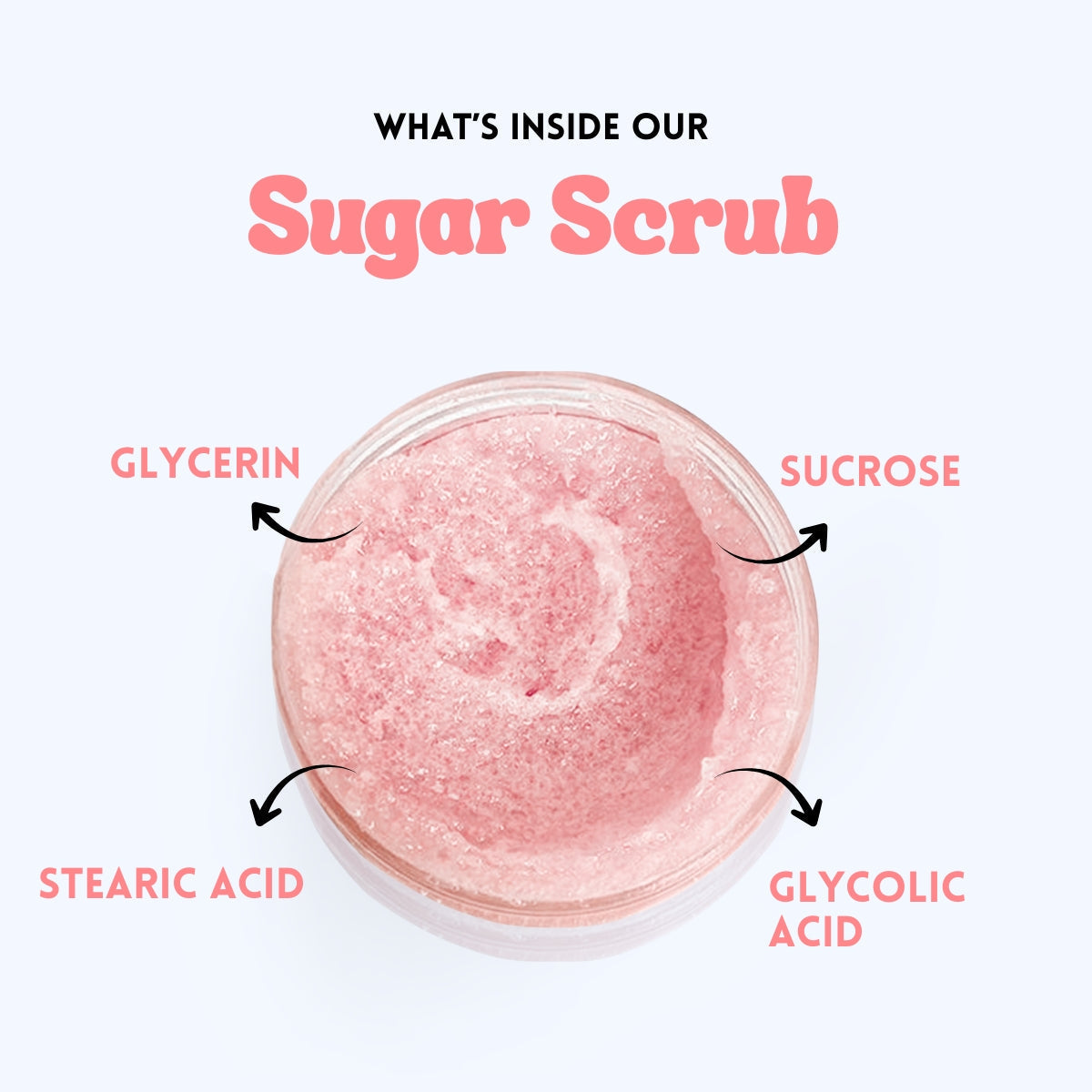
If you've ever dealt with rough, bumpy skin on your arms, legs, or back — the kind that no amount of moisturiser seems to fix — there's a good chance you're missing one ingredient in your routine: glycolic acid.
It's the same ingredient that transformed skincare routines for the face, and it works just as powerfully on the rest of your body. In this guide, we'll break down exactly what glycolic acid does, why it works so well on body skin, how to use it safely, and who it's best suited for — especially if you're dealing with Pakistan's heat, humidity, and the skin concerns that come with it.
What Is Glycolic Acid?
Glycolic acid is an alpha hydroxy acid (AHA) derived from sugarcane. It belongs to the same family of acids as lactic acid and mandelic acid, but it has the smallest molecular size of the group — which means it penetrates the skin more deeply and works faster.
It's been used in dermatology for decades and is one of the most well-studied skincare ingredients available. When used in the right concentration for body care (typically 2–10%), it's both effective and safe for regular use.
How Does Glycolic Acid Work on the Skin?
Your skin naturally sheds dead cells every 28–40 days through a process called cell turnover. As you age — or due to factors like sun exposure, heat, and dehydration — this process slows down. Dead skin cells build up on the surface, leading to:
- Rough, sandpaper-like texture
- Dull, uneven skin tone
- Clogged pores and breakouts on the body
- Dark spots and hyperpigmentation
- Dry patches that don't respond to moisturiser
Glycolic acid works by dissolving the bonds that hold dead skin cells together, allowing them to shed naturally and revealing the fresh, healthy skin underneath. It also signals the skin to produce more collagen, which improves texture and firmness over time.
Think of it like this: moisturiser feeds your skin, but glycolic acid actually clears the path so that moisture can get in.
Why Your Body Skin Needs More Help Than Your Face
Most people treat their face with active ingredients but completely ignore the rest of their body. This is understandable — the face is more visible, and the skincare industry has traditionally focused there — but body skin has its own challenges:
Body skin is thicker. Skin on the arms, legs, and back is significantly thicker than facial skin, which means it takes longer for products to penetrate and dead cells accumulate more stubbornly.
It's exposed to friction. Clothing rubbing against skin all day contributes to congestion and rough texture, particularly on the upper arms, thighs, and back.
Pakistan's climate makes it worse. High heat and humidity in Pakistan leads to excessive sweat, which mixes with dead skin cells and sunscreen, clogging pores on the body. This is one of the main reasons body acne and rough skin texture are so common here.
Sun damage is real. In Pakistan, UV exposure is extremely high year-round. Exposed areas like arms and legs accumulate pigmentation and uneven tone faster than in cooler climates, and glycolic acid is one of the most effective ingredients for addressing this.
The Key Benefits of Glycolic Acid for Body Skin
1. Smoother Texture
This is the most immediate and noticeable result. After just a few uses, rough or bumpy skin feels noticeably softer. Glycolic acid dissolves the dead cell buildup that causes that rough, uneven feel.
2. Treating Keratosis Pilaris (Chicken Skin)
Keratosis pilaris — those tiny, rough bumps most commonly found on the upper arms and thighs — is one of the most common skin concerns in Pakistan. It happens when keratin (a protein) plugs the hair follicle. Glycolic acid gently breaks down that keratin buildup, gradually reducing the bumps and redness over time. It's one of the only non-prescription ingredients proven to help.
3. Brighter, More Even Skin Tone
Hyperpigmentation from sun exposure, shaving, or friction (like inner thighs or underarms) responds well to regular glycolic acid use. It speeds up the shedding of pigmented skin cells and promotes healthier, more evenly toned skin underneath.
4. Prevents Body Breakouts
Back acne, chest breakouts, and "bacne" are common in hot, humid climates. Glycolic acid keeps pores clear by removing the dead cell buildup that traps sebum and bacteria.
5. Enhances Moisturiser Absorption
This is the benefit most people don't realise: when dead cells sit on the surface of your skin, they create a barrier that stops your body butter, body oil, or moisturiser from actually absorbing properly. Exfoliating with glycolic acid means your moisturising products work better and penetrate deeper.
6. Long-Term Skin Renewal
With consistent use over months, glycolic acid stimulates collagen production in the deeper layers of skin. This leads to firmer, more youthful-looking skin on the body — something regular soap and moisturiser simply cannot achieve.
How to Use Glycolic Acid on Your Body
Option 1: Glycolic Acid Sugar Scrub (Best for Beginners)
A foaming sugar scrub with glycolic acid combines physical and chemical exfoliation in one step. The sugar granules physically buff away surface cells while the glycolic acid works chemically to loosen deeper buildup.
How to use:
- Wet your skin in the shower
- Take a small amount of scrub and apply in gentle circular motions
- Focus on rough areas: elbows, knees, upper arms, thighs, heels
- Leave on for 1–2 minutes to let the acid work
- Rinse thoroughly
- Follow with a body butter or body oil while skin is still slightly damp
Frequency: 2–3 times per week. Don't over-exfoliate — more is not better with AHAs.
Option 2: Glycolic Acid Body Cleanser
A mandelic or glycolic acid-infused body wash provides gentler, daily-use exfoliation. It's ideal for maintenance between scrub sessions or for those with sensitive skin who want to build up gradually.
How to use:
- Apply to damp skin with a loofah or your hands
- Massage in and leave on for 30–60 seconds before rinsing
- Follow with moisturiser
Frequency: Daily use is fine for cleansers with lower acid concentrations.
The Ideal Body Routine (Layering Order)
For maximum results, layer your products in this order:
- Glycolic Acid Sugar Scrub (2–3x per week in the shower)
- Body Cleanser (daily)
- Body Butter or Body Emulsion (immediately after shower, on damp skin)
- Body Oil (seal everything in, especially on very dry areas)
Who Should Use Glycolic Acid?
Glycolic acid is suitable for most skin types, but here's a quick breakdown:
Great for:
- Dry, rough, or bumpy skin
- Keratosis pilaris (chicken skin on arms/thighs)
- Uneven skin tone, dark spots from sun or friction
- Body acne and congested pores
- Anyone wanting smoother, softer skin overall
Use with caution if you have:
- Very sensitive or reactive skin — start with lower concentrations (2%) and use less frequently
- Active eczema or psoriasis — consult a dermatologist before introducing acids
- Open cuts, wounds, or sunburned skin — never apply acids to broken skin
Start low, go slow. If you're new to glycolic acid on your body, begin with a 2% concentration 2x per week and observe how your skin responds before increasing frequency.
Glycolic Acid & Sun Exposure: What You Need to Know
AHAs like glycolic acid can increase your skin's sensitivity to the sun. This is particularly important in Pakistan, where UV exposure is high year-round.
Key rules:
- Use glycolic acid products in the evening or at night when possible
- Always apply sunscreen to exposed skin (arms, legs) during the day when using AHAs regularly
- If you're exfoliating your legs, apply SPF before going outdoors
This doesn't mean you can't use glycolic acid during summer — it just means sun protection becomes even more essential.
How Long Does It Take to See Results?
This is the most common question, and the honest answer is: it depends on your starting point and consistency.
| Timeline | What You Can Expect |
|---|---|
| Week 1–2 | Skin feels noticeably softer and smoother after each use |
| Week 3–4 | Texture improvement becomes more visible; rough patches start reducing |
| Month 2 | Skin tone begins to even out; keratosis pilaris bumps become less pronounced |
| Month 3+ | Significant improvement in hyperpigmentation, texture, and overall radiance |
Consistency is everything. Glycolic acid is not a one-time fix — it works through repeated, regular use.
What to Pair With Glycolic Acid (And What to Avoid)
Pair glycolic acid with:
- Niacinamide — calms any mild irritation, improves skin barrier, and enhances brightening effects. Our Niacinamide Shea Body Butter is the perfect follow-up.
- Squalane — a lightweight oil that deeply hydrates without clogging pores. Ideal after acid exfoliation.
- Kojic acid — great for tackling hyperpigmentation. Use in a separate step (e.g., scrub in the shower, kojic emulsion after).
Avoid using at the same time as:
- Other AHAs or BHAs in the same session (can over-exfoliate)
- Retinoids on the body (too much skin irritation risk)
- Physical scrubbing tools like harsh loofahs immediately after applying a glycolic acid product (double physical + chemical exfoliation can damage skin barrier)
Why 2% Glycolic Acid Is the Sweet Spot for Body Care
You'll find glycolic acid products ranging from 2% to 30%+ (used in professional chemical peels). For body skincare — especially for daily or near-daily use — 2% is the ideal concentration.
Here's why:
- High enough to deliver real, visible exfoliation over time
- Low enough for regular use without stripping or sensitising the skin
- Safe for all skin tones, including deeper South Asian skin tones that are more prone to post-inflammatory hyperpigmentation from over-exfoliation
- Suitable for sensitive skin types when used correctly
Our Glycolic Acid Foaming Sugar Scrubs use exactly this concentration — designed for effective results without compromising your skin barrier.
The Magic Molecules Approach
At The Magic Molecules, we believe skincare shouldn't mean choosing between results and an enjoyable experience. Our glycolic acid body scrubs are formulated with 2% glycolic acid in a foaming sugar base that exfoliates, cleanses, and leaves behind a subtle scent you'll actually look forward to.
Made in small batches in Pakistan, manufactured in an ISO 22716:2007 certified facility, and Halal certified — every product is designed to perform while being mindful of what goes on your skin.
Whether you're dealing with keratosis pilaris, sun damage, rough texture, or just want softer skin from head to toe, glycolic acid is one of the most powerful tools you can add to your body care routine.
👉 Shop our Glycolic Acid Sugar Scrubs →
👉 Explore our full Body Care Collection →
Frequently Asked Questions
Can I use glycolic acid on my body every day? A 2% glycolic acid cleanser can be used daily by most people. A scrub is better used 2–3 times per week to avoid over-exfoliation.
Is glycolic acid safe for dark or brown skin? Yes — at 2%, it's safe for all skin tones. In fact, it's particularly beneficial for South Asian skin tones that are prone to hyperpigmentation and uneven tone. Avoid higher concentrations without professional guidance.
Can I use glycolic acid on my face and body? Yes, but use products formulated specifically for each. Body skin is thicker, and body formulas are calibrated for that. Don't use a high-concentration facial AHA toner on large body areas.
What happens if I stop using glycolic acid? Your skin won't "rebound" negatively, but the gradual build-up of dead cells will resume. The results aren't permanent — consistent use maintains them.
Is glycolic acid safe during pregnancy? Low concentrations (2%) used topically are generally considered low-risk, but consult your doctor before continuing any active ingredient routine during pregnancy.