
You started exfoliating. You bought a brightening product. You have been using it for weeks. But your dark knees, elbows, underarms, inner thighs, or body acne marks still look almost the same.
So what is going wrong?
The problem may not be that your skincare is “too weak.”
Very often, body pigmentation does not fade because the skin is still being irritated while you are trying to treat the pigment that irritation created.
Dermatologists recommend identifying and controlling the cause of dark spots first. Once the trigger is reduced, treatments for uneven pigmentation have a much better chance of working.
That gives us a much better way to think about body pigmentation.
The 2-Part Rule for Fading Body Pigmentation
Instead of asking:
“Which is the strongest brightening ingredient?”
Ask two questions:
1. What keeps creating new pigmentation?
2. What will help fade the pigmentation that is already there?
A routine can fail when you focus only on question two.
For example, you may use kojic acid on your inner thighs every day. But if tight clothing continues rubbing the area for hours, your skin may still be dealing with irritation.
Or you may exfoliate dark knees three times a week while also physically scrubbing them every day.
You are trying to fade old pigmentation while creating conditions that can trigger new discoloration.
So before adding another active ingredient, find your pigmentation pattern.
Find Your Body Pigmentation Pattern First
Not every dark area needs the same treatment.
| What You Notice | What May Be Happening | What to Focus on First |
| Flat dark marks after body acne | Post-inflammatory pigmentation | Control the breakouts and avoid picking |
| Dark inner thighs | Repeated friction or irritation | Reduce friction before adding stronger actives |
| Dark marks after shaving | Razor irritation or ingrown hairs | Improve shaving technique |
| Rough, dull knees and elbows | Dryness, friction and surface buildup | Controlled exfoliation + moisture |
| Dark dots around hair follicles | Shaving, clogged follicles or ingrown hairs | Hair-removal routine + exfoliation |
| Dark marks on exposed arms or shoulders | Sun exposure may be maintaining pigmentation | Sun protection |
| Skin that is burning, peeling or very irritated | Your routine may be too aggressive | Repair the skin before using more actives |
| Sudden or unusual dark, thick patches | May need proper diagnosis | Speak with a dermatologist |
This distinction matters because dark-looking skin is not always just excess pigment.
Sometimes you are dealing with pigment.
Sometimes texture.
Sometimes dryness.
Sometimes inflammation.
And sometimes several of these problems are happening together.
Reason 1: You Are Treating Every Dark Area the Same Way
One of the biggest mistakes in body care is treating every dark patch as the same problem.
Consider these three examples.
A flat brown mark left after a back pimple is different from a rough dark elbow.
And both are different from dark dots that appear after shaving your legs.
The first may be post-inflammatory hyperpigmentation.
The second can involve friction, dryness and surface buildup.
The third could be connected to the hair follicles, shaving or ingrown hairs.
Post-inflammatory hyperpigmentation commonly appears after inflammation or injury. Acne can also leave flat dark marks after the breakout itself has healed.
What to Do Instead
Stop choosing a product based only on the word “brightening.”
First identify whether your biggest problem is:
- Pigmentation
- Rough texture
- Body acne
- Ingrown hairs
- Dryness
- Shaving irritation
- Ongoing friction
Then build the routine around that problem.
For example, if your “pigmentation” is mostly strawberry legs, read our guide on How to Get Rid of Strawberry Legs instead of treating the dots like ordinary dark patches. Magic Molecules already has a dedicated guide covering the causes and routine for strawberry legs.
Reason 2: The Trigger Is Still Active
This may be the most important reason stubborn body pigmentation keeps returning.
Dark spots often develop after something irritates or inflames the skin. Removing that trigger can help prevent new pigmentation from forming.
Think about your daily habits.
Are your thighs rubbing together every day?
Are you shaving your underarms with a dull razor?
Are you picking body acne?
Are tight sleeves constantly rubbing your elbows?
Are you scratching irritated skin?
If the answer is yes, adding another brightening ingredient does not solve the full problem.
Example: Dark Underarms
You could use pigmentation-targeting skincare consistently.
But if shaving continues irritating your underarms every few days, you may keep creating new inflammation.
This is why a good underarm routine should include both pigmentation care and irritation prevention.
If underarms are your main concern, our guide How to Lighten Dark Underarms: What Actually Works covers that area in much more detail.
Example: Body Acne Marks
The same rule applies to acne.
If new pimples continue appearing on the back or chest, you may keep getting new dark marks even while older ones slowly fade.
Picking or squeezing acne can also increase the risk of lingering dark spots.
Treat the cause and the mark.
Not only the mark.
Reason 3: You Are Exfoliating Too Much
Body pigmentation can make us impatient.
A little exfoliation helps, so we assume more exfoliation must work faster.
That is where routines can go wrong.
You may be using:
A chemical exfoliating cleanser.
Then a glycolic scrub.
Then another exfoliating product.
Then physically scrubbing the area with a loofah.
Meanwhile, the skin starts feeling tight, sensitive, itchy or uncomfortable.
Skin irritation can make dark spots more noticeable, especially in skin that develops pigmentation easily after inflammation. Dermatologists specifically recommend avoiding products that burn or sting because irritation can make dark spots darker.
What to Do Instead
Think of exfoliation as a dose, not a competition.
Your goal is to remove unnecessary surface buildup without constantly irritating the skin.
Magic Molecules' Glycolic Acid Foaming Body Scrubs contain 2% glycolic acid and combine chemical exfoliation with the physical action of a sugar scrub.
That means there is no benefit in pressing harder simply because the area looks darker.
Use gentle pressure.
And if your skin is new to exfoliating acids, start slowly.
More irritation does not equal more brightening.
Reason 4: You Chose the Right Ingredient for Pigmentation — but the Wrong Ingredient for Your Skin
This is where skincare becomes more useful than simply making a list of “best ingredients for pigmentation.”
Glycolic acid, mandelic acid, kojic acid and niacinamide do not perform exactly the same role.
The better question is:
Which one fits your current problem?
Kojic Acid vs Glycolic Acid vs Mandelic Acid vs Niacinamide
Choose Kojic Acid When:
Your biggest concern is visible uneven pigmentation or dark marks rather than very rough texture.
The Magic Molecules Kojic Acid Body Emulsion contains kojic acid dipalmitate along with niacinamide, glycerin and panthenol and is designed for uneven body tone, dark spots and post-acne marks. It is intended for daily use, with sun protection recommended during the daytime.
If you want to understand the ingredient itself in more detail, read our complete Kojic Acid for Body Skin guide rather than repeating the same ingredient science here.
Choose Glycolic Acid When:
Your pigmentation is accompanied by roughness, dullness or noticeable surface buildup.
This can make it useful for areas such as rough knees, elbows and legs.
But glycolic acid should not become an excuse to exfoliate aggressively.
For the full ingredient breakdown, see our Complete Guide to Glycolic Acid for Body Skin.
Choose Mandelic Acid When:
You want exfoliation but prefer a gentler starting point, particularly when bumps, mild body acne or shaving-related concerns are also present.
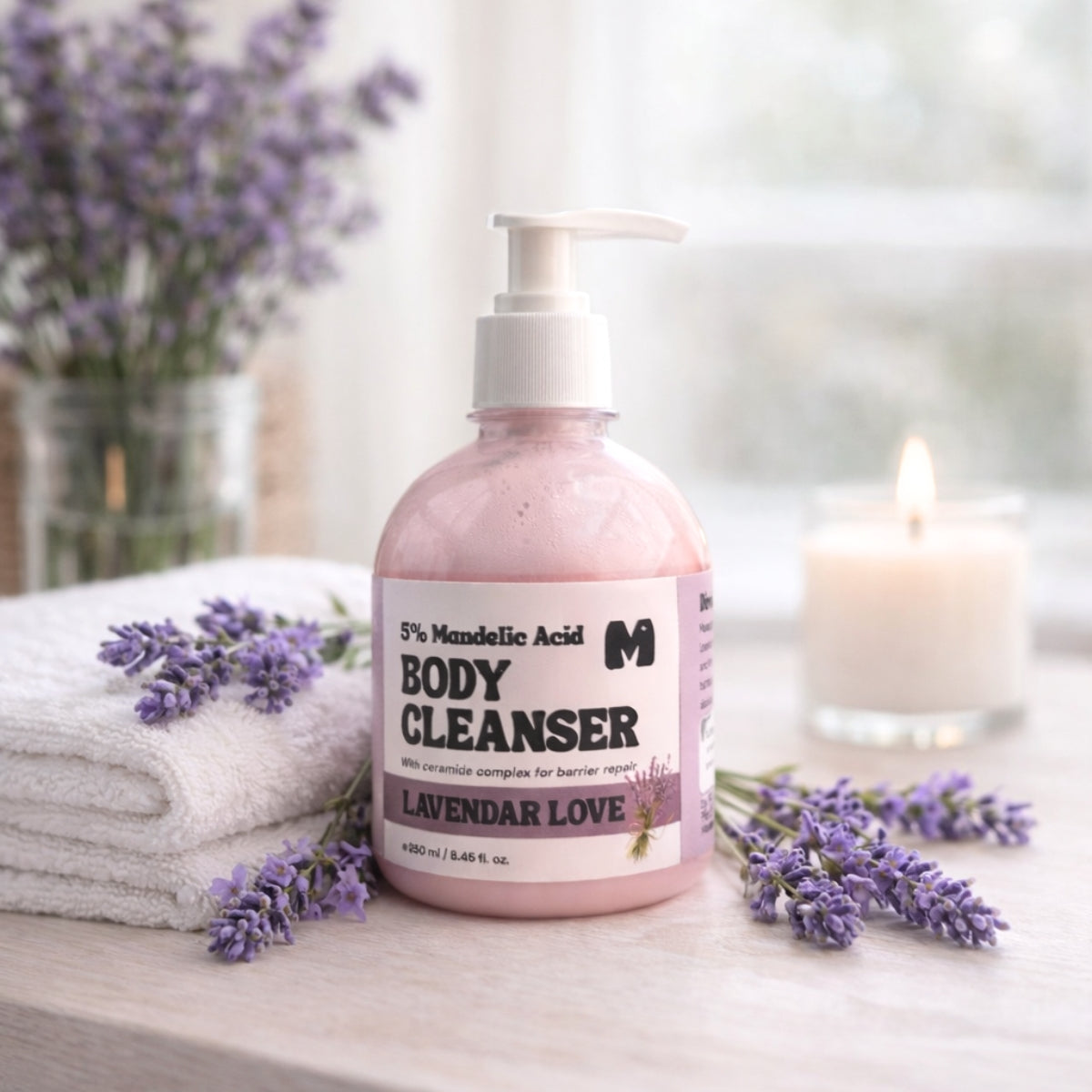
Magic Molecules Body Cleansers use 5% mandelic acid and are positioned for gentle exfoliation, body bumps, mild body acne and uneven-looking skin.
Our separate guide on Mandelic Acid Body Cleanser for Body Acne & Body Odor covers this use case in more depth.
Choose Niacinamide When:
Your skin needs daily barrier support and hydration while you work on uneven-looking tone.
This can be especially useful if strong exfoliation is leaving your skin dry.
Magic Molecules Body Butters contain 2% niacinamide alongside moisturizing ingredients such as shea butter.
For the complete ingredient explanation, see our guide to Niacinamide for Body Skin.
When None of Them Should Be Your First Step
If the skin is:
- Burning
- Raw
- Extremely itchy
- Freshly injured
- Severely inflamed
- Suddenly changing in appearance
Stop trying to find a stronger brightening ingredient.
The skin may need recovery or professional assessment first.
Reason 5: You Are Treating Pigmentation but Ignoring Your Skin Barrier
This is particularly important when you are using exfoliating acids.
People often build a pigmentation routine around everything that removes, exfoliates or brightens.
But almost nothing in the routine protects or moisturizes.
That can become a problem.
Imagine trying to improve an irritated dark elbow by exfoliating it again and again while leaving it dry every day.
You may improve some surface buildup but still have skin that feels rough and uncomfortable.
A Better Approach
Pair targeted treatment with consistent moisturization.
This is also where niacinamide-based body care can make more sense than adding another exfoliating product.
If the skin already feels dry and rough, sometimes your next step should be more barrier support, not more acid.
Reason 6: You Are Fading Old Marks While Creating New Ones
This is the body pigmentation cycle many people do not notice.
One mark gets lighter.
Two new ones appear.
So the overall area never seems to improve.
This happens frequently when the underlying problem is something recurring, such as:
- Body acne
- Ingrown hairs
- Shaving irritation
- Scratching
- Repeated friction
For example, an old ingrown-hair mark may gradually fade while another shaving session creates fresh bumps.
Then another round of pigmentation begins.
If shaving is causing your marks, our How to Prevent Ingrown Hairs After Shaving guide explains the prevention side of the problem in detail.
This is why measuring progress only by asking “Is this one dark spot gone?” can be misleading.
A better question is:
“Am I getting fewer new dark marks than before?”
That is often the first sign that your routine is moving in the right direction.
Reason 7: You Expect Pigmentation to Fade Too Quickly
Skin does not work according to social media timelines.
Hyperpigmentation can take time even after the original cause is controlled.
The American Academy of Dermatology notes that some spots only a few shades darker than the natural skin tone may take around 6 to 12 months to fade on their own after the trigger has stopped. Deeper discoloration can take longer, although appropriate treatment may help speed the process.
This does not mean you will see zero improvement for six months.
But it does mean that promising yourself completely even skin in seven days is unrealistic.
Older pigmentation may also behave differently from a mark that appeared last month.
Look for Gradual Changes
Instead of expecting the area to suddenly become clear, look for:
- The edges of marks becoming softer
- Less contrast between the mark and surrounding skin
- Fewer new dark spots
- Smoother texture
- Less irritation
- More even-looking skin overall
Progress is usually gradual.
The Body Pigmentation Routine Decision Guide
Now that you know why pigmentation may not be fading, your routine becomes easier to choose.
If Your Main Problem Is Flat Dark Marks
Focus on preventing new irritation and use a targeted pigmentation product such as the Kojic Acid Body Emulsion consistently.
If Your Main Problem Is Dark + Rough Skin
Controlled exfoliation may be more useful.
A glycolic acid body scrub can help address surface roughness, but avoid aggressive or daily scrubbing.
If Your Skin Is Sensitive or Shaving-Prone
A mandelic acid cleanser may be a gentler exfoliating route than repeatedly using stronger exfoliation.
If Your Skin Is Dry and Uneven
Prioritize moisturization and barrier support.
A niacinamide body butter can fit this role while your targeted treatment works on the pigmentation.
If You Have Both Roughness and Pigmentation
Do not throw every active onto your skin at once.
A simpler approach is:
Exfoliation on selected days + targeted pigmentation care + daily moisturization.
This gives each part of the routine a clear job.
What About Sun Exposure?
If the area you are treating is regularly exposed — such as your arms, shoulders, hands, legs or feet — sun protection matters.
UV exposure and visible light can contribute to hyperpigmentation and make existing dark spots harder to clear. Dermatologists recommend sun protection as a key part of managing dark spots.
Cover exposed skin when practical and use suitable broad-spectrum sunscreen on areas that remain uncovered.
Treating pigmentation while repeatedly exposing it to sunlight can slow your progress.
When Body Pigmentation Needs More Than Skincare
Not every dark patch is something you should diagnose yourself.
Speak with a dermatologist if pigmentation:
- Appears suddenly
- Changes quickly
- Becomes unusually thick
- Looks velvety
- Is painful
- Is very itchy
- Comes with a persistent rash
- Continues getting worse despite removing obvious triggers
Different skin conditions can cause changes in skin colour, so an accurate diagnosis matters when the appearance is unusual or persistent.
Skincare is useful.
But skincare should not replace diagnosis when the skin is telling you something unusual.
Frequently Asked Questions
Why is my body pigmentation not fading even after using kojic acid?
Kojic acid may target existing uneven pigmentation, but it cannot stop every possible trigger.
If friction, shaving irritation, body acne, sun exposure or another source of inflammation continues, new dark marks may keep developing while older ones fade.
Look at the cause as well as the treatment.
Can over-exfoliating make body pigmentation worse?
It can make the situation harder to manage if the exfoliation irritates your skin.
If your skin burns, stings, peels heavily or becomes inflamed, reduce your exfoliation and allow your skin to recover. Dermatologists note that irritating skincare can contribute to darker spots.
Which is better for body pigmentation: glycolic acid or kojic acid?
Neither is automatically “better.”
If your main concern is rough surface buildup and texture, glycolic acid may make more sense.
If your main concern is visible uneven pigmentation or dark marks, kojic acid may be a more targeted choice.
Some people may eventually use both within a balanced routine, but that does not mean they should be aggressively layered together every day.
Why are my knees still dark after scrubbing?
Because dark-looking knees may involve more than dead skin.
Friction, dryness, rough texture and pigmentation may all contribute.
Scrubbing harder can also irritate the area.
Try combining controlled exfoliation with regular moisturization instead of increasing pressure or frequency.
How long does body pigmentation take to fade?
There is no single timeline.
Newer, surface-level marks may improve faster than old or deeper pigmentation. Dermatology guidance notes that some dark spots can naturally take many months to fade after the original trigger is removed.
Consistency matters more than chasing overnight results.
Should I use more products if my pigmentation is not improving?
Not automatically.
Before adding another product, check:
Is the trigger still present?
Am I over-exfoliating?
Am I getting new marks?
Is my skin dry or irritated?
Am I treating the correct type of problem?
Sometimes simplifying the routine is more useful than adding another active.
The Bottom Line
If your body pigmentation is not fading, the solution is not always a stronger ingredient.
Start with the cause.
Stop the irritation that is creating new pigmentation.
Then treat the marks that already exist.
Choose exfoliation when rough texture is part of the problem.
Choose targeted pigmentation care when dark marks are the main concern.
Support dry or irritated skin instead of continuously exfoliating it.
And give your skin enough time to respond.
The most useful body pigmentation routine is not the one with the most products.
It is the one where every product has a reason to be there.